Nannup’s Avenue of Honour on Centenary Drive, stands as a living memorial to those from Nannup who served their country in armed conflicts and war. Ornamental Pear Trees line the road, each standing sentinel over a plaque bearing the name of the fallen. This was a joint project between Local Veterans, Department of Veterans Affairs and Nannup RSL
The Avenue of Honour encourages visitors and locals to walk in this beautiful setting and contemplate those who never returned and the cost of war to our small rural communities. Nannup continues to honour its fallen through ANZAC Day, Remembrance Day, Vietnam Veterans Day and maintaining and promoting its memorials; The Avenue of Honour, Nannup War Memorial Precinct and Marinko Tomas Statue.
Remembering the Fallen
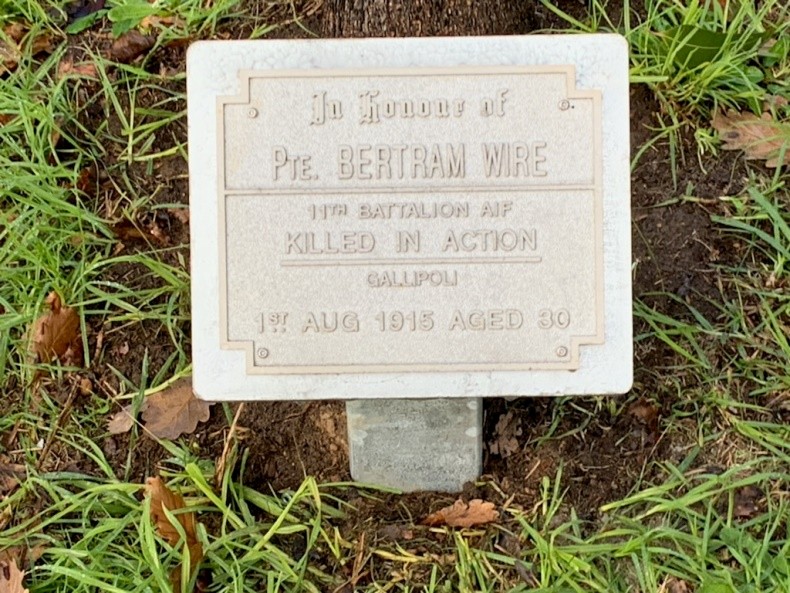
Behind every name on these plaques is a life once lived — a childhood, a family, workmates, friendships, hopes for the future. To be eligible to be included in the Avenue of Honour they must have been killed on active service and either enlisted in Nannup or gave their place of birth or residence as Nannup. All remain buried on foreign soil, except one buried at sea and one whose remains were returned and rests in Nannup Cemetery, Marinko Tomas. Each plaque records their rank, name, and military unit, place of death, date and age.
These stories of the 23 men, who were sons of Nannup or people who chose Nannup as their home. They were farmers, timber workers, mill hands, schoolteachers, clerks, carpenters and labourers. Some were community leaders, sportsmen or volunteers; others were newly married, young fathers, or barely grown.
They served across two world wars and in the Vietnam War, in places that would have been unimaginable to them when they left home — Gallipoli, Pozières, Messines, Bullecourt, Kokoda, New Guinea, Singapore, the Western Front, North Africa, Europe’s skies and Vietnam’s jungles. Some were killed in battle, others died of wounds, illness, as Prisoners of War or at sea. Many have no known grave.
What unites them is not only their sacrifice, but their connection to this place and its people. Their stories reflect courage, duty, resilience and the profound cost of service, borne not only by those who went to war, but by families and communities left behind.
We invite you to read their stories — not as distant history, but as individual lives remembered, honoured, and kept alive through memory.